RAJ 108 Conscious Philosophy
RUDRAKSHA
Sacred Seed of Stillness

The Wisdom of Rudraksha
Used for centuries in contemplative traditions, the Rudraksha bead represents steadiness, compassion and inner discipline.

静 — Stillness
Sacred Seed of Stillness
Rudraksha comes from the evergreen tree Elaeocarpus ganitrus, traditionally found in India and Nepal.
The Seed — The Rudraksha bead is the dried seed of the fruit of the tree.
Its naturally segmented surface forms distinct lines known as mukhis.
In traditional use, these patterns were believed to hold symbolic meaning, while the tactile surface supports rhythmic movement during meditation.
In modern psychology, physical objects used during meditation are sometimes described as attention anchors — helping guide the mind back to breath, rhythm and present awareness.
In many traditions, malas consist of 108 beads, a number symbolizing completeness and cosmic order in yogic philosophy.
Across cultures and centuries, the Rudraksha bead has remained a quiet companion in contemplative practice.
Within RAJ 108, it continues this tradition — as a symbol of grounded awareness, carried into modern life.
Meaning Within RAJ 108
The Tradition and use
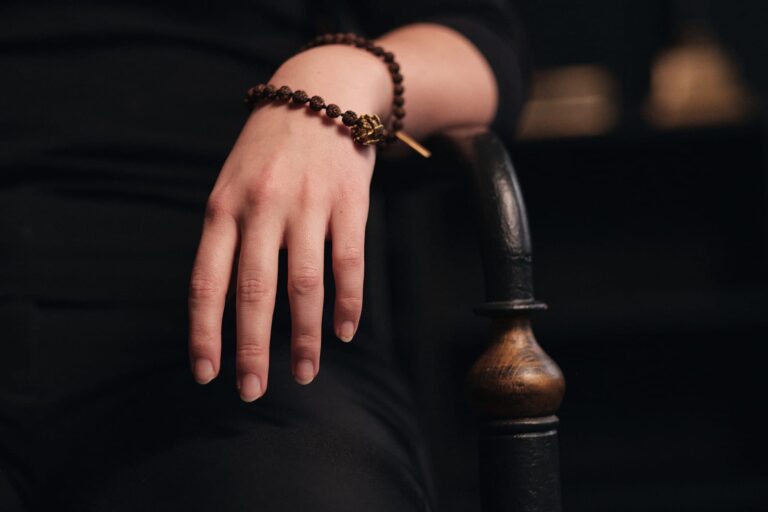
Rudraksha beads have traditionally been used for:
• Japa meditation
• Prayer malas
• Devotional discipline
• Travel protection
In yogic philosophy,
Shiva represents pure awareness
— steady, grounded and contained.
Rudraksha reflects this calm aspect of the Masculine Divine - presence without force, structure without rigidity.
Within RAJ 108, the bead symbolizes a return to inner steadiness —a reminder that clarity often arises through stillness rather than effort.
Across contemplative traditions, physical objects such as beads have been used to support rhythm and repetition in meditation.
Modern psychology describes this as anchoring attention — where touch, breath and movement work together to stabilize awareness.
In this way, Rudraksha becomes more than a symbolic object.
It becomes a quiet structure for returning to presence.
Wear Rudraksha as
A reminder of inner steadiness.
安定 — Stability
Rudra (Shiva) — consciousness
Aksha (Tears) — expression
Rudraksha is often translated as “The Tears of Shiva”
Legend tells that after long meditation, Shiva opened his eyes and wept for the suffering of the world.
Where his tears touched the earth, Rudraksha trees began to grow.
Across cultures, symbolic objects have long been used to support contemplative practices.
The story of Rudraksha therefore carries both myth and meaning:a symbol of compassion held within strength.

A symbol of disciplined compassion.
A quiet anchor in movement.

Element — Earth
Quality — Grounded Stillness
Symbolic Archetype — The Sage
The element
The Sensory Connection
The textured surface of the bead creates a tactile rhythm during meditation.
As the fingers move slowly from bead to bead, the body settles into a natural pattern of repetition.
In many contemplative traditions, this gentle repetition supports focus and steadiness of mind.
Modern research in psychology and neuroscience suggests that rhythmic touch and repetitive movement can help regulate attention and calm the nervous system.
Practices involving breath, touch and repetition have been shown to support parasympathetic activation
— the body’s natural state of rest and recovery.
The tactile quality of Rudraksha therefore becomes more than a material feature.
It creates a sensory anchor — a physical point of contact that helps bring awareness back to the present moment.
This is why mala beads have been used for centuries in meditation practices around the world.
Rudraksha does not promise transformation.
It simply offers a quiet structure for returning to presence.
 Malas
Malas